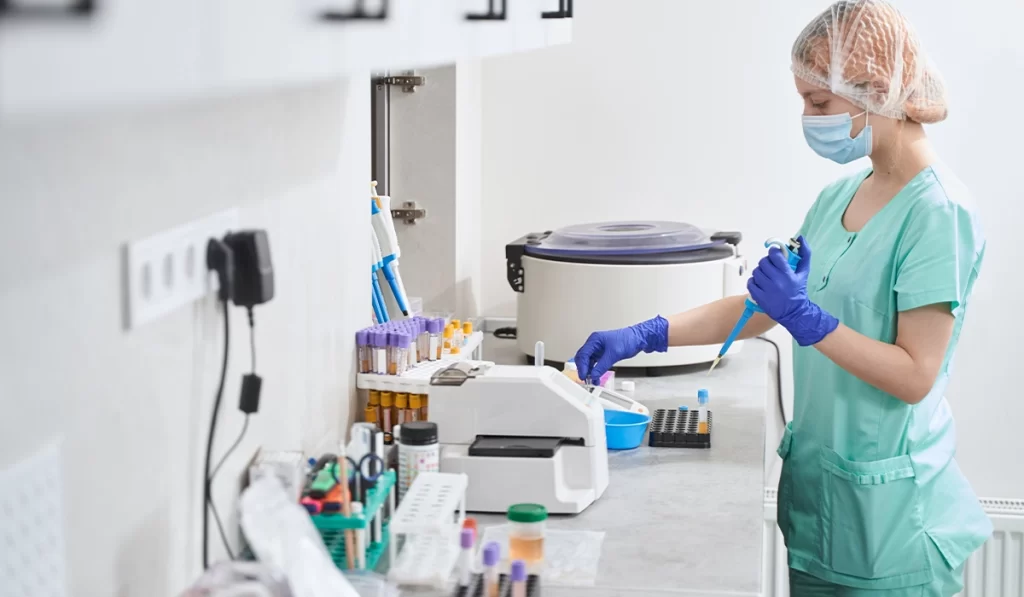
Laboratory

Reliable Diagnostic Expert Testing

Professional Laboratory Services for Accurate, Convenient Healthcare

Accurate laboratory testing is an important part of modern healthcare. Blood tests, urine tests, screening panels, and other diagnostic investigations can help doctors identify health concerns, monitor existing conditions, evaluate symptoms, and assess how well a treatment is working.
At XpertCare Clinic in Dubai Healthcare City, our laboratory services are designed to provide patients with convenient access to essential diagnostic testing as part of a coordinated healthcare experience. Our services support the needs of adults, families, and patients receiving care across different medical specialties.
Whether you have been referred for routine blood work, require testing because of specific symptoms, or need regular monitoring for an existing condition, appropriate laboratory testing can provide your doctor with valuable clinical information.
Our laboratory services support physicians across specialties, including internal medicine, cardiology, endocrinology, gynecology, pediatrics, urology, dermatology, and other areas of healthcare.

What Are Laboratory Services?

Laboratory services involve the examination of biological samples to provide information about a person’s health.
Depending on the clinical requirement, samples may include:
The tests requested depend on your symptoms, medical history, age, risk factors, and the purpose of the investigation.
Laboratory testing may be used for:
Laboratory results should always be interpreted in the context of your overall health. A result outside a reference range does not automatically mean that you have a disease, while a normal result does not necessarily exclude every medical condition.

Common Laboratory Tests

XpertCare Clinic may provide or coordinate a range of diagnostic tests according to clinical requirements.

Complete Blood Count

A complete blood count (CBC) measures various components of blood, including red blood cells, white blood cells, and platelets.

It can help doctors investigate conditions such as anemia, infection, inflammation, and certain blood disorders.

Blood glucose testing can help identify abnormal blood sugar levels.

Blood glucose testing can help identify abnormal blood sugar levels.

Depending on the clinical situation, doctors may request fasting glucose, random glucose, or HbA1c testing. HbA1c provides an indication of average blood glucose levels over approximately the previous two to three months.

These tests are particularly important for people with diabetes or those at increased risk of developing diabetes.

Cholesterol Testing

A lipid profile measures cholesterol and triglyceride levels.

The results may help doctors assess cardiovascular risk and determine whether lifestyle modifications or treatment should be considered.

Thyroid Function Tests

Thyroid testing may include measurements such as TSH and thyroid hormone levels.

These tests can help evaluate symptoms associated with thyroid disorders, including weight changes, fatigue, temperature sensitivity, and changes in heart rate.

Liver and Kidney Function Tests

Blood tests can provide information about liver and kidney function.

These investigations may be used as part of routine assessments or when a doctor is evaluating specific symptoms, chronic conditions, or medication effects.

Urine Testing

Urinalysis can help identify signs of urinary tract infections, kidney problems, diabetes, and other conditions.

Depending on the situation, urine culture or additional testing may be recommended.

Laboratory Testing for Preventive Healthcare

You do not always need to feel unwell to benefit from appropriate laboratory testing.
Routine health assessments can help identify risk factors before they cause noticeable symptoms. Depending on age, sex, family history, lifestyle, and existing medical conditions, a physician may recommend tests for blood sugar, cholesterol, anemia, kidney function, liver function, thyroid health, or other markers.
Preventive testing should be individualized rather than based on unnecessary testing. Your doctor can determine which investigations are clinically appropriate.

Preparing for Laboratory Tests

Some tests require specific preparation.
For example, your doctor may ask you to fast before certain blood tests. Other investigations may not require fasting.
Preparation instructions can vary depending on the test, so patients should follow the instructions provided by the healthcare team rather than assuming that fasting is always required.
Tell your doctor about:
Following instructions carefully can help reduce the likelihood of inaccurate or difficult-to-interpret results.

Understanding Your Results

Laboratory results are typically reported using reference ranges. These ranges can differ between laboratories and testing methods.
A result slightly outside a reference range does not necessarily indicate illness. Doctors consider the result alongside symptoms, physical examination, medical history, medications, and other investigations.
If your results require further assessment, your physician can explain what they mean and whether additional testing or treatment is appropriate.

Why Choose XpertCare Clinic for Laboratory Services?

At XpertCare Clinic, we understand that patients want healthcare that is professional, convenient, and reasonably accessible.
Our laboratory services are integrated with our broader medical services, enabling physicians to use relevant diagnostic information when evaluating patients.
Patients can benefit from:
Our objective is not to order unnecessary tests. Instead, laboratory investigations should serve a clear clinical purpose and help your healthcare professional make informed decisions.

Frequently Asked Questions About Laboratory Services

What laboratory services are available at XpertCare Clinic?
Our laboratory services support a variety of routine and clinically indicated investigations, including blood, urine, and other diagnostic tests. The exact tests recommended depend on your medical needs.
Not necessarily. Some tests require fasting, while others do not. Follow the preparation instructions provided by your doctor or the laboratory team.
The time required varies depending on the type of investigation. Some routine tests may be processed relatively quickly, while specialized testing may take longer.
Blood glucose and HbA1c testing can help identify diabetes and abnormal blood sugar levels. Your doctor will interpret the results in light of your symptoms and medical history.
Depending on your age, medical history, family history, and risk factors, your doctor may recommend preventive testing. The appropriate tests should be individualized.
Do not stop prescribed medication unless your doctor specifically instructs you to do so. Inform the clinic about the medications and/or supplements you are taking before the blood test.
Laboratory services provide objective clinical information that can help doctors diagnose conditions, monitor health, evaluate symptoms, and assess treatment response.
XpertCare Clinic provides access to diagnostic laboratory services in Dubai Healthcare City as part of its broader medical care.