Causes and Risk Factors
Symptoms
Diagnosis
Treatment
Causes and Risk Factors
Symptoms
Diagnosis
Management
Causes and Risk Factors
Symptoms
Diagnosis
Management
Symptoms
Diagnosis
Management
Causes
Symptoms
Diagnosis
Management
Common Types
Symptoms
Diagnosis
Management
Risk Factors
Symptoms
Diagnosis
Management
Causes
Symptoms
Diagnosis
Management
Causes
Symptoms
Diagnosis
Management
Possible Causes
Diagnosis
It may be time to schedule a cardiology evaluation with our heart consultants if you notice any of the following symptoms:

An ECG records the electrical activity of the heart and can help identify abnormal rhythms and other cardiac changes.
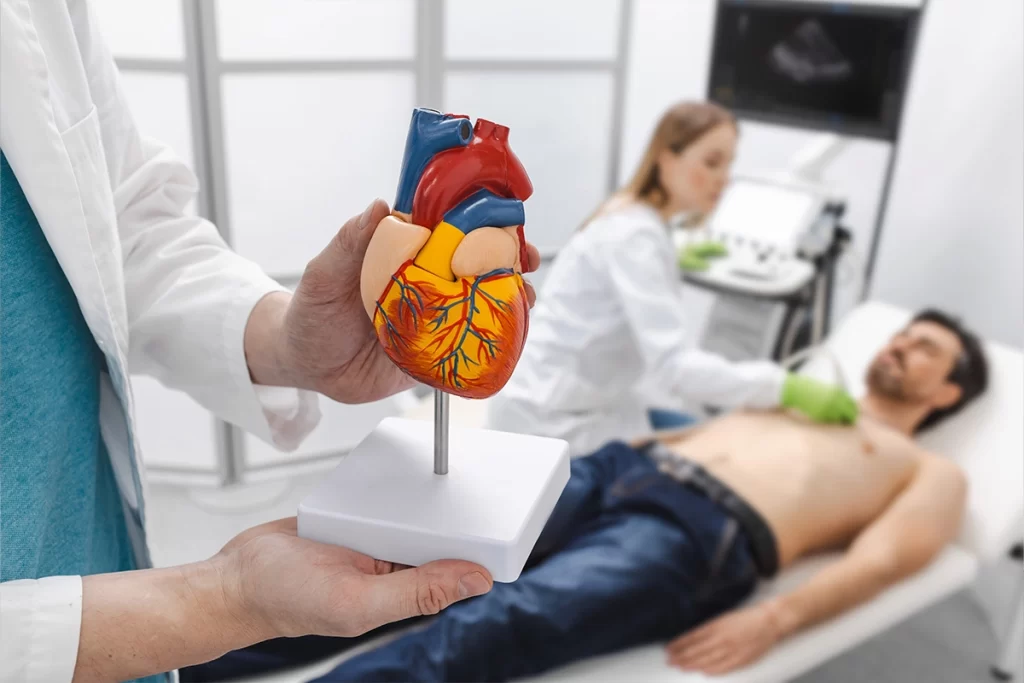
An echocardiogram uses ultrasound to examine the heart’s structure, valves, pumping function, and blood flow.
A Holter monitor records heart rhythm continuously over an extended period and can help detect intermittent rhythm abnormalities.
Blood tests may assess cholesterol, glucose, thyroid function, anemia, and cardiac markers when appropriate.
Home or ambulatory blood pressure monitoring can provide a more complete picture of blood pressure throughout the day.
Cardiology involves specific therapies and prescriptions designed to treat and prevent heart disease. Based on your unique diagnosis, our consultants may prescribe medications to:
Based on your unique diagnosis, our consultants may prescribe medications to: